7 Questions to Ask a Water Damage Company in Riverside Before You Hire Them
The wrong company can turn a fixable problem into a mold issue and an insurance dispute. Ask these questions first.
Quick Answer
In Riverside CA, verify that any water damage restoration company is California-licensed, holds IICRC certification, uses calibrated moisture meters, provides written drying logs, and has a local crew. Ask whether they communicate directly with your insurance adjuster and whether they carry general liability insurance with a certificate available on request.
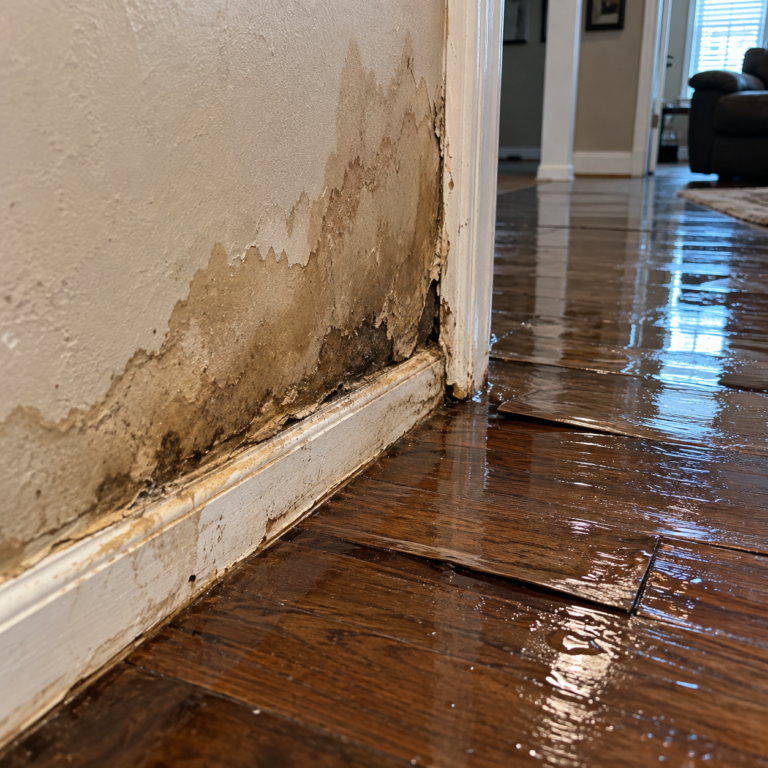
In an emergency, homeowners in Riverside often call the first number they find. That is understandable. But water damage restoration is not a commodity service. A company that cuts corners during the drying phase can leave moisture in your walls that fuels mold growth for months. A company that does not document correctly can get your insurance claim denied. And a company that subcontracts your job to an unknown crew has transferred accountability to a team you never agreed to hire.
These seven questions take about five minutes to ask. They can save you a serious amount of money and headache.
Question 1: Are You Licensed and Insured in California?
This is non-negotiable. In California, contractors performing restoration work must hold appropriate state licensing, and any company working on your property needs general liability insurance to cover property damage or injury during the job. Ask for the license number and a certificate of insurance before any work begins.
Some out-of-state companies that market heavily after storm events in the Inland Empire are not properly licensed in California. If a company cannot give you a license number immediately, do not proceed. You can verify California contractor licenses through the Contractors State License Board at cslb.ca.gov.
Question 2: Are Your Technicians IICRC Certified?
The IICRC (Institute of Inspection, Cleaning and Restoration Certification) sets the industry standard for water damage restoration. The S500 Standard for Professional Water Damage Restoration governs how technicians assess moisture, set drying goals, place equipment, and document the drying process. Mold remediation follows the S520 standard.
Companies that do not hold IICRC certification are not bound by these protocols. They may skip moisture documentation, under-dry a structure, or miss affected areas entirely. Insurance carriers recognize IICRC documentation, and adjusters often require it to process claims. Ask for the names and certification numbers of the technicians who will be on your job, not just whether the company has an IICRC account.
Question 3: What Equipment Will You Use, and How Many Pieces?
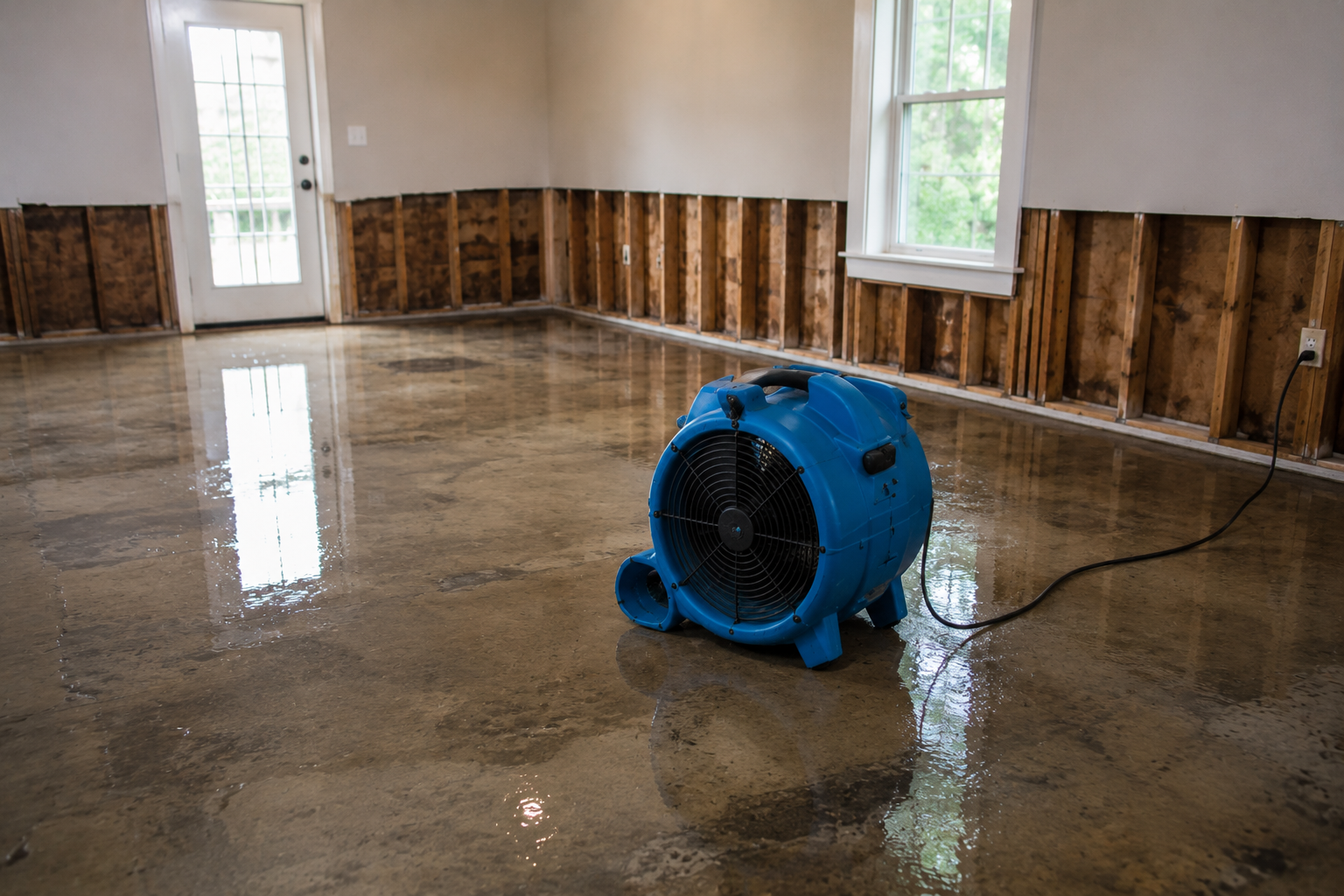
Professional water damage restoration requires industrial air movers, dehumidifiers calibrated to the cubic footage of the affected area, and moisture meters to set and verify drying targets. Ask specifically what equipment they plan to place in your home and how many units.
A legitimate company will give you a concrete answer based on the size of the affected area. A company that hedges or says they will figure it out when they get there is likely under-equipping the job. Proper drying ratios are defined in the IICRC S500 standard, and a team that does not follow them will leave moisture behind in materials that appear dry on the surface.
Question 4: Will You Provide Written Moisture Documentation?
Every professional drying job should produce a written drying log that records daily moisture readings, equipment settings, temperature, and relative humidity for each affected material and area. This documentation tells the technician when the structure is actually dry, and it gives your insurance carrier the evidence they need to approve the claim.
A company that does not use moisture meters or does not keep drying logs is not performing professional restoration. It is performing cleanup. The difference matters when your insurer asks for proof that the structure was dried to industry standards before reconstruction began. Ask to see an example drying report before you hire anyone.
Question 5: Will You Communicate Directly with My Insurance Adjuster?
After a water damage event, homeowners are often juggling an active mess, displaced family members, and an insurance process they may not understand. A restoration company that communicates directly with your adjuster, explains the scope of work, and submits documentation on your behalf is a significant advantage.
Ask whether the company has experience working with the major carriers that operate in Riverside County and whether they can provide estimates in the format your insurer requires. For more on how California insurance claims work, the California Department of Insurance at insurance.ca.gov has a public guide to the claims process.
Question 6: Will This Job Be Handled by Your Own Crew or Subcontracted?
Many national franchise operations in the Inland Empire market locally but dispatch jobs to subcontracted crews you never meet until they show up at your door. Those crews may not be held to the same training standards, and accountability for their work can be unclear if something goes wrong.
Ask directly: will the technicians who respond be employees of your company, covered under your insurance, and trained by you? If the answer is no or vague, ask for details about how the subcontractors are vetted and insured. Get it in writing. Undisclosed subcontracting is a red flag.
Question 7: What Is Your Response Time, and Can You Commit to It?
Water damage compounds by the hour. Ask for a specific estimated response time, not a vague “we respond quickly.” Ask whether they have a crew available now and how long it will take to arrive on-site.
For most Riverside addresses and nearby Inland Empire cities, a local company should be able to put a crew on-site within 60 minutes. An out-of-area company dispatching from a distant staging location may take significantly longer, even if they advertise local service. See our water damage restoration page for details on what to expect from our response process.
Red Flags to Walk Away From
Walk away from any company that demands full upfront payment before work is complete, offers to waive your insurance deductible (this is insurance fraud in California), refuses to provide a written scope of work before starting, claims they can skip the drying phase to “save time,” or applies high-pressure tactics that discourage you from asking questions before signing anything.
Riverside CA Water Damage Restoration will answer all seven questions above before any work begins, and we will give you a written scope before our crew starts. Call (951) 209-1226 or visit our About page to learn more about our team and credentials.
Frequently Asked Questions
Get a Free Assessment
Tell us what happened and we will respond within 15 minutes. We will answer every question on this page before any work begins.
Phone: (951) 209-1226
Email: [email protected]
2 Comments