5 Mistakes Riverside Homeowners Make After a Flood
What you do in the first few hours after a flood determines how expensive and complicated the recovery gets.
Quick Answer
After a flood in a Riverside home, do not re-enter while power is on, do not run HVAC on contaminated water, do not wait more than 24 to 48 hours to call a restoration professional, do not discard damaged property before documentation, and do not assume standard homeowners insurance covers all flood damage. Flooding from the Santa Ana River or Anza Channel requires separate NFIP flood coverage.
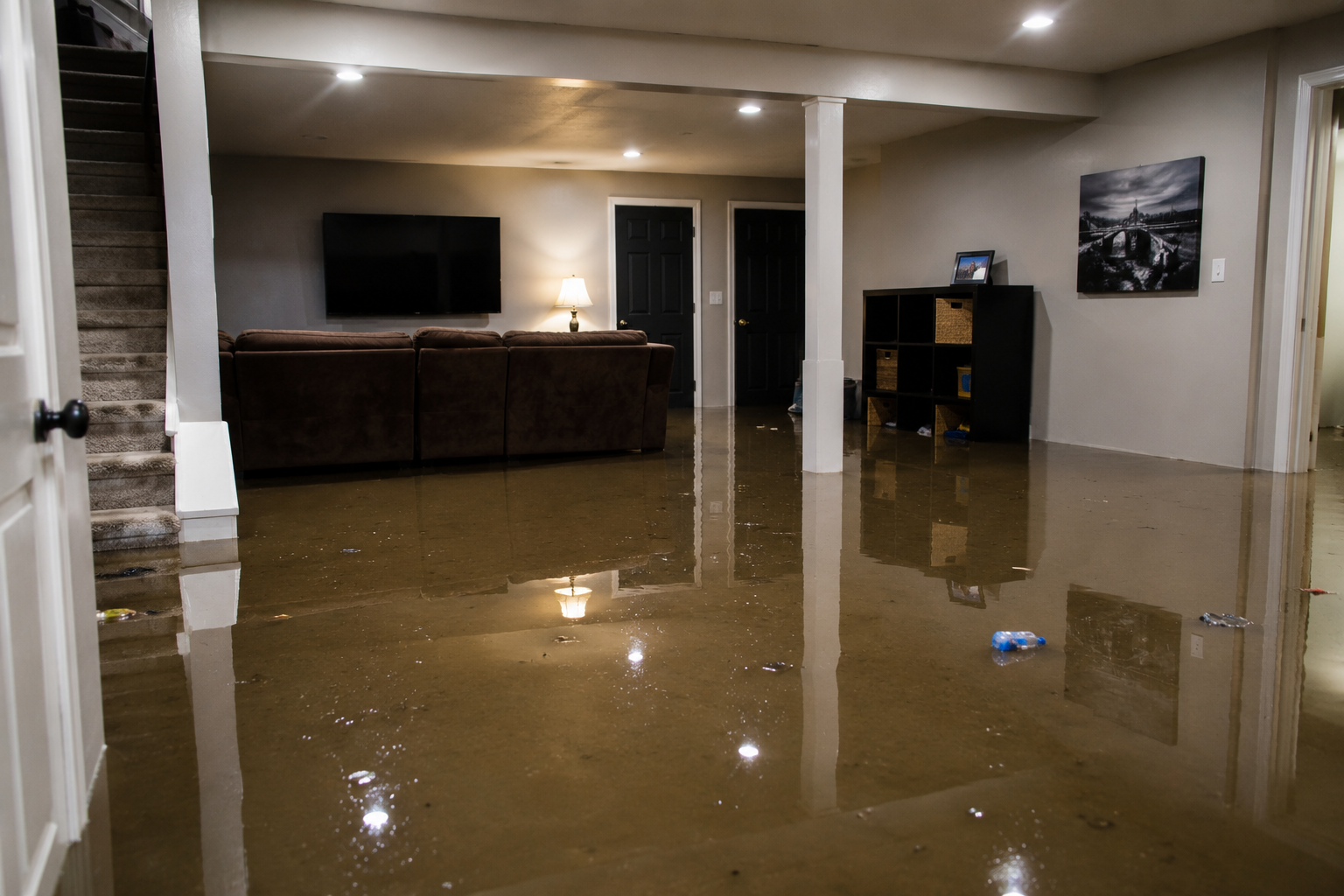
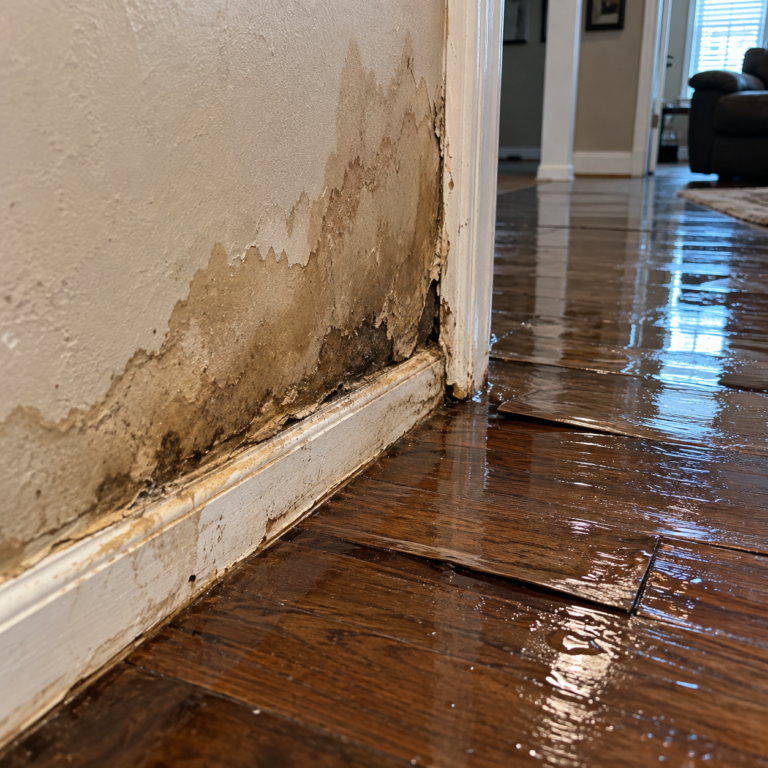
Riverside gets flooding events that most people are not prepared for. An atmospheric river rolls in from the Pacific, the Santa Ana River or the Anza Channel rises faster than expected, and suddenly a home in a neighborhood that has been dry for years has water on the floor. What the homeowner does in the next few hours matters enormously.
These are the five mistakes we see most often. Every one of them makes the recovery longer, more expensive, or harder to get covered by insurance.
Mistake 1: Entering the Home While Power Is On or Unknown
Water conducts electricity. Flood water can submerge outlets, appliances, and wiring that is still live. Entering a flooded home without first confirming that the electrical panel has been shut off is a serious safety risk that kills people every year.
What to do instead: Before entering any flooded space, shut off power at the main breaker if it is accessible from outside the building. If the panel is inside the flooded area or you cannot safely reach it, call SCE and wait for them to disconnect service. Only then is it safe to enter. FEMA’s flood safety guidance at ready.gov/floods covers this and other immediate safety protocols in detail.
This is especially important in Riverside homes with crawl spaces, where floodwater can enter through the crawl space access, saturate the subfloor, and rise without coming through a door.
Mistake 2: Running Fans or HVAC on Contaminated Floodwater
When water enters a home from an external flooding source — the Santa Ana River overflowing, storm drains backing up, or the Anza Channel exceeding capacity during a heavy atmospheric river event — it carries Category 3 contaminated water. That means sewage, agricultural runoff, chemicals, and biological material.
Running ceiling fans, box fans, or your HVAC system through a home with Category 3 contaminated water disperses those contaminants into the air and throughout your ductwork. The HVAC system then circulates contaminated air to every room in the house, including rooms that were never flooded.
What to do instead: Open windows if it is safe to do so without allowing more water in. Do not run any forced-air system until a restoration professional has assessed the category of water and cleared HVAC use. See our Riverside flood cleanup page for a full overview of Category 3 water protocols.
Mistake 3: Waiting More Than 24 to 48 Hours to Call a Restoration Company
Mold can begin growing in as little as 24 hours after water exposure. Category 3 water degrades the health safety of the affected area within the same window. Structural materials that dry on the surface but retain moisture inside become permanent mold hosts. Every hour of delay narrows the options and widens the scope of work required.
Waiting also creates insurance problems. Most homeowners insurance policies include a prompt reporting requirement and a duty to mitigate further damage. If you wait several days before calling anyone, your insurer may argue that additional damage that developed during that window was preventable and therefore not covered.
What to do instead: Call a licensed restoration company within the first few hours if at all possible. You do not need to have everything sorted out before you call. Reach us at (951) 209-1226 any time. We dispatch immediately. See our emergency water damage page for step-by-step guidance on what to do while waiting for a crew.
Mistake 4: Throwing Away Damaged Property Before Documenting Everything
After a flood, the instinct is to start pulling out wet rugs, soaked furniture, and damaged belongings as fast as possible. But discarding items before your insurance adjuster has seen them, or before they are documented with photos and a written inventory, can cost you thousands of dollars in coverage.
Insurance adjusters need to see the damage to price it. Items that are removed and discarded before documentation cannot be claimed. This is especially relevant for Riverside homeowners dealing with Inland Empire insurance adjusters who manage high volumes of claims during storm season and who expect documentation before approving replacement costs.
What to do instead: Photograph everything before moving anything. Use your phone to document every room from multiple angles, capture the waterline height on walls, and photograph each damaged item individually. Move things out of standing water for safety, but do not dispose of anything until your adjuster or restoration company has completed their documentation.
Mistake 5: Assuming Standard Homeowners Insurance Covers All Flood Damage
This is the mistake that devastates Riverside homeowners the most. A standard HO-3 homeowners insurance policy covers sudden and accidental water damage from internal sources: a burst pipe, an appliance overflow, a roof leak from rain. It does not cover flooding from external water sources.
Flooding from the Santa Ana River exceeding its banks, storm drain overflow during a heavy atmospheric river, or the Tequesquite Arroyo backing up into adjacent neighborhoods all qualify as external flood events. Those events are covered by the National Flood Insurance Program (NFIP) administered by FEMA, which is a separate policy that homeowners must purchase in advance. You cannot buy it after the flood has started.
What to do instead: Know which type of policy you have before a flood event. If you live in a low-lying area of Riverside near the Santa Ana River corridor or in any FEMA-designated flood zone, a separate NFIP policy is worth seriously considering. The California Department of Insurance at insurance.ca.gov has guidance on the claims process and your rights as a policyholder.
The Right Move After a Flood
Cut power, get out of the water, photograph everything, call a restoration company, and call your insurance carrier. In that order. That five-step response does more to protect your property and your claim than any other combination of actions you can take in the first hour. Call Riverside CA Water Damage Restoration at (951) 209-1226 any time. We answer 24/7 and dispatch immediately across Riverside and the full Inland Empire.
Frequently Asked Questions
Get Help Now
Describe what happened and we will respond within 15 minutes. Available 24 hours a day, 7 days a week.
Phone: (951) 209-1226
Email: [email protected]
One Comment