
8 Signs You Have Hidden Water Damage in Your Riverside Home
Most water damage is not visible until it is already serious. Here is what to look for before the repair bill triples.
Quick Answer
Hidden water damage in Riverside homes shows up as musty odors, soft or buckling floors, stained walls or ceilings, peeling paint, elevated water bills, visible mold, warped door frames, and unexplained insect activity. Riverside crawl space homes built before 1970 near Downtown and UC Riverside are especially prone to moisture problems that go undetected for months.
Riverside, CA is a city with serious water damage history that most homeowners never talk about. The clay-heavy soils move seasonally, older plumbing runs beneath or through slab foundations, and pre-1970s homes in neighborhoods near Downtown sit on crawl spaces that trap moisture year-round. You can have a real problem developing behind a wall or under your floor right now and not know it until something visible finally gives way.
These eight signs are what we see most consistently when we walk a property that has had water damage going unnoticed for weeks or months.
1. A Persistent Musty or Earthy Smell
This is often the first thing people notice, and the first thing they try to solve with an air freshener. Do not. A musty odor that does not go away after opening windows is almost always biological. Mold and mildew produce volatile organic compounds as they grow, and those compounds have a distinctive earthy smell that no candle covers permanently.
In Riverside homes with crawl spaces, this smell often comes up through the floor. It is more noticeable in winter and early spring when soil moisture is higher. If you are smelling something you cannot trace to a drain or trash can, have the crawl space and any water-adjacent rooms inspected. See EPA guidance on mold and indoor air quality for more context.
2. Soft, Spongy, or Buckling Floors
Press down in the center of any room. Wood and laminate floors that have absorbed moisture lose structural integrity. They feel slightly soft underfoot, or they flex and creak in spots that used to be solid. Tile floors can develop soft spots where the adhesive or subfloor beneath has deteriorated.
This is a significant sign in pre-1970s Riverside homes built on raised foundations. The subfloor in those homes sits directly over the crawl space, and a moisture problem in the crawl space transfers upward into the floor structure without any wall stain or ceiling drip ever appearing. By the time the floor feels soft, the joists below may already have wood rot.
3. Stained or Discolored Walls and Ceilings
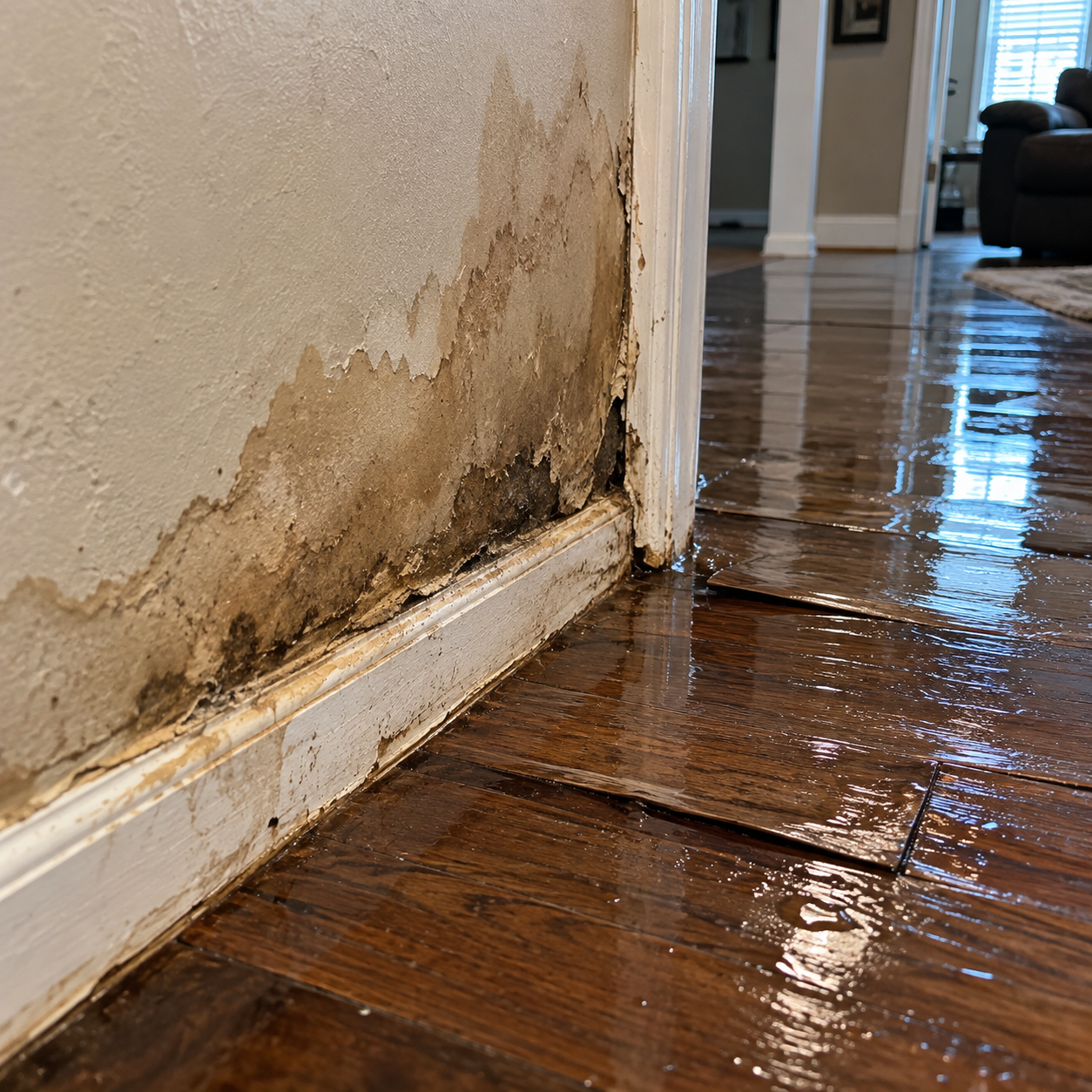
Brown or yellow rings on a ceiling or wall are dried watermarks. They form when water intrudes, dries, and leaves behind minerals and organic material from whatever it passed through. One ring might mean a one-time event. Multiple rings at different sizes mean the problem has recurred over time.
Look for these in bathrooms, along exterior walls, and anywhere below a second floor or a roof line. In Riverside homes after atmospheric river rain events, ceiling stains near chimneys or skylights are common. Painting over a watermark without fixing the source is a temporary fix that insurance adjusters and home inspectors will flag immediately. Contact our team at Riverside CA Water Damage Restoration if you see these patterns.
4. Peeling, Bubbling, or Warped Paint
Paint adheres to dry surfaces. When moisture accumulates behind a wall, it pushes outward and causes paint to peel, bubble, or warp. You may also notice wallpaper pulling away from seams or lifting at corners.
This often shows up on exterior-facing walls first, especially in older Riverside Craftsman and Spanish Revival homes where original plaster walls have absorbed decades of moisture cycles. It also appears on walls adjacent to bathrooms or kitchens where plumbing is hidden inside the wall cavity.
5. An Unexplained Increase in Your Water Bill
A slow leak inside a wall or beneath a slab can lose hundreds of gallons per month without any visible water ever appearing. If your water bill has gone up and your usage habits have not changed, a hidden leak is the likely explanation.
This is a particularly relevant sign in post-1970s Riverside homes built on slab-on-grade foundations. Plumbing in those homes often runs beneath or through the concrete slab. A slab leak can saturate the concrete and wick upward into flooring materials for months before anything visible appears on the surface. From there, water damage restoration handles the structural drying that a plumber cannot.
6. Visible Mold Growth
If you can see mold, the problem is already past the early stage. Mold grows on the surface of materials after the moisture behind them has been present long enough to support a colony. What you see on the wall surface is a fraction of what may exist inside the wall cavity.
In Riverside, common locations for visible mold include grout lines in bathrooms, under kitchen sinks, in closets on exterior walls, and along the bottom edges of walls in rooms above a crawl space. Small patches under 10 square feet may be manageable with professional cleaning, but larger growth or any growth that follows a water event requires full mold remediation with containment and post-remediation air testing.
7. Warped or Sticking Door and Window Frames
Wood absorbs moisture and expands. Doors that suddenly stick, frames that are visibly bowed, and windows that no longer open and close smoothly are classic signs of structural moisture absorption. In older Riverside homes, wooden window frames and door jambs respond quickly to crawl space moisture working its way up through the wall framing. If multiple doors in the same area of the house are sticking at the same time, that pattern points to a moisture source in that zone.
8. Unexplained Insect Activity
Termites and carpenter ants are attracted to wood that has been softened by moisture. If you are seeing either pest inside the house without a clear entry point, the more likely explanation is that there is wet or rotting wood somewhere in the structure they have found. Riverside’s dry climate does not typically produce termite swarms out of thin air. They follow moisture.
This sign is particularly common in crawl space homes where moisture has been present long enough to cause wood rot in the subfloor joists or mudsills. Fix the moisture source first, or the pest treatment will not hold.
What to Do If You See Any of These Signs
Do not wait for multiple signs to appear before calling. One sign, investigated early, often leads to a minor repair. Multiple signs ignored for months can lead to structural damage, mold remediation, and insurance disputes that take weeks to resolve. We offer free assessments across Riverside and the Inland Empire. Call (951) 209-1226 and let us walk the property.
Frequently Asked Questions

Schedule a Free Assessment
If you have seen any of these signs, do not wait. Fill out the form and we will call you back within minutes.
Phone: (951) 209-1226
Email: [email protected]
2 Comments