
Mold Remediation Riverside CA | Find It, Remove It, Keep It Gone
Professional mold inspection, containment, and removal for Riverside homes and businesses. IICRC-certified process, EPA-registered treatments, post-clearance testing.
Call (951) 209-1226Quick Answer
Mold remediation in Riverside, CA typically takes 1 to 5 days. Small contained growth under 10 square feet can be addressed in a single day. Larger infestations in crawl spaces, wall cavities, or HVAC systems require containment setup, multi-day treatment, and post-remediation air clearance testing before the area can be reopened and rebuilt.
Mold remediation in Riverside, California is not a cleaning job. It is a controlled, containment-based process that removes existing mold growth, eliminates the moisture source, and prevents recontamination — all documented to a standard that your insurance company and a real estate transaction can accept. We serve homeowners across Riverside, from the Craftsman-era neighborhoods near Downtown to the modern slab-foundation subdivisions in Orangecrest and Woodcrest.
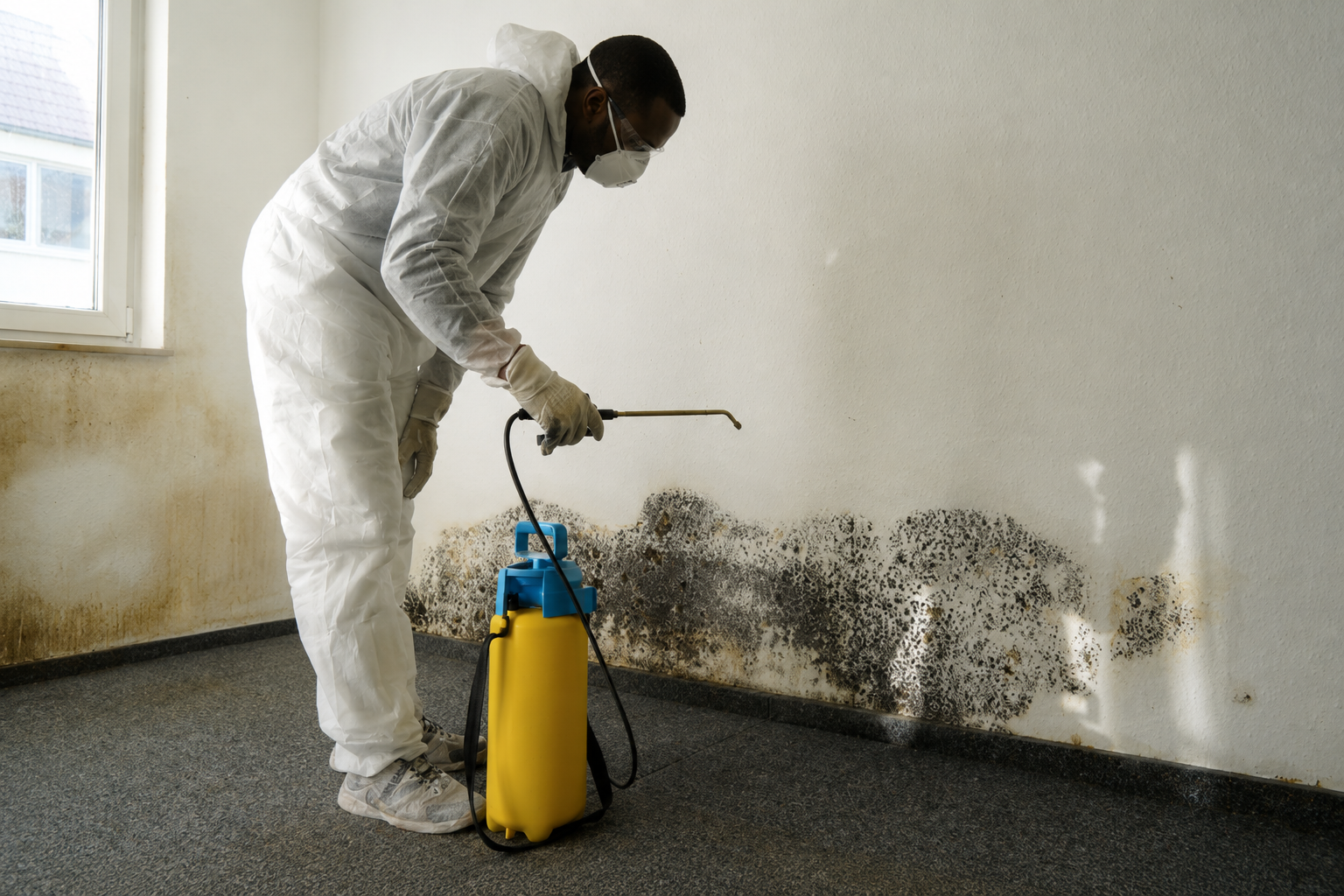
How Fast Does Mold Develop After Water Damage?
Speed is everything. Mold spores are present in the air everywhere, including your Riverside home right now. They need only three things to activate: a food source (drywall paper, wood, dust), warmth, and moisture. Here is the general timeline:
- 1 to 24 hours: Water saturates porous materials. Spores begin absorbing moisture and activating on wetted surfaces.
- 24 to 48 hours: Mold colonies begin establishing. Not always visible yet, but the process has started in wall cavities, behind baseboards, and under subfloors.
- 48 to 72 hours: Visible mold growth on drywall paper, wood framing, and carpet backing. Musty odor becomes detectable.
- 1 week and beyond: Colonies spread to adjacent surfaces. HVAC systems can distribute spores to other rooms. A localized remediation job becomes a whole-home problem.
Riverside’s Inland Empire climate adds a specific factor: while the region is arid in summer, crawl spaces under older homes trap moisture year-round from soil evaporation and plumbing drips. The lack of ventilation and the dark, warm conditions under a raised foundation make it one of the most mold-prone spaces in any Riverside property.
Health Risks of Mold in Riverside Homes
The EPA’s guidance on mold is clear: mold exposure causes respiratory symptoms, allergic reactions, and in immunocompromised individuals, serious health complications. Common Riverside mold species found after water damage include Cladosporium, Penicillium, Aspergillus, and in severe cases following prolonged water damage, Stachybotrys chartarum (black mold). No species of mold is safe to live with in elevated concentrations.
Common Symptoms
Persistent cough, sinus congestion, headaches, eye irritation, fatigue, and skin rashes are all associated with elevated mold levels in a living space.
High-Risk Groups
Children, elderly adults, and anyone with asthma, allergies, or a compromised immune system face significantly higher health risk from mold exposure.
Why Riverside’s Climate Accelerates Mold Growth
Riverside is classified as a semi-arid inland climate, but that does not mean mold is rare. The combination of winter rain events, warm interior temperatures, and the enclosed crawl spaces common under pre-1970s homes creates ideal mold conditions from November through March. Air conditioning units that run during the intense Inland Empire summers also generate condensation that drips into walls and ceilings when drain lines back up — one of the most common mold scenarios we see in newer Riverside slab-foundation homes.
Our Mold Remediation Process
-
Inspection and Moisture Source Identification
We find the mold and we find where the moisture is coming from. Remediating mold without fixing the source is a temporary fix — it will return within weeks.
-
Containment Setup
Affected areas are sealed with poly sheeting and negative air pressure is established to prevent spores from spreading to unaffected rooms during the removal process.
-
HEPA Air Filtration
HEPA air scrubbers run continuously during remediation, capturing airborne spores and particulates down to 0.3 microns.
-
Mold Removal
Affected porous materials are removed and properly bagged for disposal. Hard surfaces are HEPA-vacuumed and treated with EPA-registered fungicides and encapsulants where applicable.
-
Post-Remediation Air Testing
Independent clearance testing confirms spore counts have returned to normal indoor levels before containment is removed and reconstruction begins.
Why DIY Mold Removal Fails
Bleach does not kill mold on porous surfaces. It kills surface cells but leaves the root structures (hyphae) alive in the material. Without containment, cleaning mold releases spores into the air and spreads the problem. Without fixing the moisture source, mold regrows within 2 to 4 weeks. The EPA recommends professional remediation for any mold coverage exceeding 10 square feet — and most Riverside mold cases we are called for are well past that threshold by the time a homeowner notices.
For water damage that preceded the mold, see our water damage restoration page. For flood-related mold issues, see our flood cleanup page.
Mold Questions from Riverside Homeowners
Request a Mold Assessment
Describe what you have noticed and we will respond within 15 minutes. We serve Riverside and all communities within 50 miles.
Phone: (951) 209-1226
Email: [email protected]